
Þórr and the ferryman
Coming home from the east, Þórr asked a ferryman to row him across. He got boasts, insults and a long walk instead.
Mímir: AI draft · not reviewed
- Þórr was on his way back from the east and came to a sound. On the far side stood a ferryman with a boat. Þórr called across, offering to feed him in the morning in return for the crossing: he had a basket on his back, and had eaten herring and oats before he left home. Hárbarðsljóð 1, Hárbarðsljóð 2, Hárbarðsljóð 3
- The ferryman jeered at him. His homecoming would be sad, he said: Þórr's mother, he thought, was dead. And he hardly looked like a man with three good farms: he stood barefoot in a beggar's clothes, without even breeches. Hárbarðsljóð 4, Hárbarðsljóð 5, Hárbarðsljóð 6
- The boat, the ferryman said, belonged to Hildólfr of Ráðseyjarsund, who had told him not to ferry robbers or horse-thieves. Þórr gave his name and family: Óðinn's son, Meili's brother, Magni's father, the strength of the gods. The ferryman said his own name was Hárbarðr, 'and seldom I hide my name'. Hárbarðsljóð 7, Hárbarðsljóð 8, Hárbarðsljóð 9, Hárbarðsljóð 10
- It became a contest of boasts. Þórr had felled Hrungnir, whose head was made of stone; Hárbarðr claimed five winters with Fjölvarr on the island of Algræn, fighting and winning women, and nights with seven sisters. Þórr had killed the giant Þjazi and thrown his eyes up into the sky, where all men can see them. Each time came the question: 'What, Harbarth, didst thou the while?' Hárbarðsljóð 14, Hárbarðsljóð 15, Hárbarðsljóð 16, Hárbarðsljóð 18, Hárbarðsljóð 19
- Hárbarðr boasted of seducing women of the night away from their husbands, and of stealing the wits of the giant Hlébarðr after the giant had given him a magic wand. Þórr said he had repaid good gifts with an evil mind. Hárbarðr said he had been in Valland, stirring up wars and never making peace: Óðinn gets the nobles who fall in battle, 'And Thor hath the race of the thralls.' Hárbarðsljóð 20, Hárbarðsljóð 21, Hárbarðsljóð 24
- Then he struck at Þórr's courage. Þórr had strength but no heart, he said: out of fear he had crawled into a glove and forgot that he was Þórr, and dared neither sneeze nor fart in case Fjalarr heard. Hárbarðsljóð 26
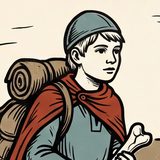
- Þórr spoke of beating back the sons of Svárangr at a river, and of fighting the brides of berserkers on Hlésey. It was shameful, said Hárbarðr, to fight women. They were she-wolves rather than women, Þórr answered: they had shaken his ship, threatened him with iron clubs and chased off Þjálfi. Hárbarðr claimed he had been in the army that came there to raise banners and redden spears; Þórr took that as hostility to the gods, and Hárbarðr offered a ring as settlement. Hárbarðsljóð 29, Hárbarðsljóð 37, Hárbarðsljóð 38, Hárbarðsljóð 39, Hárbarðsljóð 40, Hárbarðsljóð 41, Hárbarðsljóð 42
- Where had he learned such insulting talk? From old men who live in the woods of home, said Hárbarðr; Þórr said that was a fine name for burial mounds. Þórr threatened him with the hammer, and Hárbarðr answered that Sif had a lover at home, a better use for Þórr's strength. Þórr called it a lie. Hárbarðsljóð 43, Hárbarðsljóð 44, Hárbarðsljóð 45, Hárbarðsljóð 47, Hárbarðsljóð 48, Hárbarðsljóð 49
- Þórr ordered him to row over. Hárbarðr refused and gave directions instead: a while to the stump, a while to the stone, then keep left until Verland, where Fjörgyn would meet her son Þórr and show him the road to Óðinn's lands. Þórr promised to repay the refusal if they ever met again. Hárbarðr's last words: 'Get hence where every evil thing shall have thee!' Hárbarðsljóð 53, Hárbarðsljóð 54, Hárbarðsljóð 56, Hárbarðsljóð 59, Hárbarðsljóð 60
Where the sources differ
The poem never says who Hárbarðr is. The identification with Óðinn comes from elsewhere: in Grímnismál Óðinn lists Hárbarðr among his names with the gods (grm-s49), and Snorri's list of Óðinn's names includes it (g-c20-8). In the poem Hárbarðr speaks of Óðinn as someone else (hrbl-s24), and his boasts, like his claims about Þórr's mother and Sif, are only his words; he says Þórr's mother is dead but then that Fjörgyn will meet her son (hrbl-s4, hrbl-s56). In Snorri it is Óðinn, not Þórr, who throws Þjazi's eyes into the sky (s-c4-1). The glove is Skrýmir's in Snorri (g-c45-5), and Loki makes the same jibe in Lokasenna (ls-s60).
Read it yourself
- Hárbarðsljóð 6 — Þórr mocked as a barefoot beggar without breeches.
- Hárbarðsljóð 24 — Óðinn gets the nobles, Þórr the thralls.
- Hárbarðsljóð 26 — The glove jibe: strength but no heart.
- Hárbarðsljóð 56 — Directions instead of a ferry: stump, stone, and left to Verland.
Who takes part
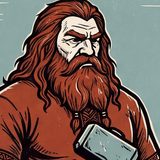 Þórr
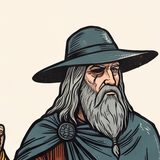 ÓðinnMeila
 Magni
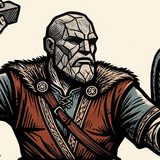 HrungnirFjölvari
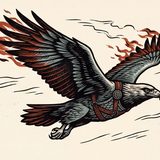 Þjazi
 Valland
 Fjalarr
 Hlésey
 Þjálfi
 Sif
 Mjöllnir
 Fjörgyn
Why here in the order: No source dates it. Þórr already boasts of killing Hrungnir and Þjazi, and the ferryman mocks him for hiding in a glove, so it is placed after those stories.