
The golden age
Before the trouble began, the gods built temples and forges, played board games in the meadow, and never lacked gold.
Mímir: AI draft · not reviewed
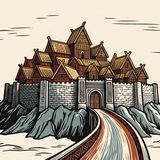
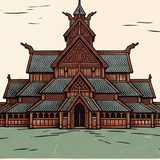
- The Æsir met on the plain of Iðavöllr. There they built altars and temples with high timbers, set up forges, worked precious metal, and shaped tongs and tools. Völuspá 7
- They played board games in the meadow and were glad. They lacked nothing made of gold. Völuspá 8
- Snorri tells it at more length. When Ásgarðr was made, Allfather set rulers in seats and asked them to judge the fates of men with him and to plan the stronghold. This was at Iðavöllr, in the middle of the stronghold. Gylfaginning 14
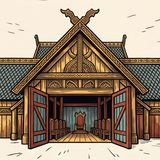
- Their first work was a temple with twelve seats besides Allfather's high seat. Snorri calls it the best and greatest house on earth, like pure gold inside and out, and names it Glaðsheimr. A second hall, a very fair sanctuary, belonged to the goddesses: Vingólf. Gylfaginning 14
- Next they built a house for a forge and made a hammer, tongs and an anvil, and with these all other tools. They worked metal, stone and wood, and so much gold that all their household goods and riding gear were made of it. 'That time is called the Age of Gold,' Snorri says. Gylfaginning 14
- It did not last. In Völuspá the good times run 'Till thither came up giant-maids three', very mighty, out of Jötunheimar. Snorri says the golden age was spoiled by the coming of the women who came from Jötunheimar. Neither source says who they were or what they did. Völuspá 8, Gylfaginning 14
- Both sources then turn to the dwarfs. The gods went to their seats of judgement, and, in Snorri's words, called to mind how the dwarfs had come to life in the earth. Völuspá 9, Gylfaginning 14
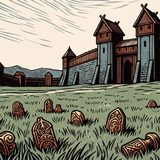
- The golden age has an echo at the very end. After Ragnarök the gods meet again at Iðavöllr, and the wonderful golden game pieces they had owned in the old days are found in the grass. Snorri tells the same, and says Iðavöllr is where Ásgarðr had been. Völuspá 60, Völuspá 61, Gylfaginning 53
Where the sources differ
Völuspá sets the golden age before the dwarfs and the first humans; Snorri tells it after Ásgarðr is built and the first people are made, and only he gives the names Glaðsheimr and Vingólf and the term gullaldr, golden age. Neither source says who the three giant women were. Völuspá also speaks of three wise maidens who come from the well under the ash, Urðr, Verðandi and Skuld (vsp-s20), but it does not say they are the same three.
Read it yourself
- Völuspá 8 — Board games, plenty of gold, and the three giant maidens who end it.
- Gylfaginning 14 — Snorri's version: Glaðsheimr, Vingólf, the forge, and gold for everything.
- Völuspá 61 — After Ragnarök the golden game pieces turn up again in the grass.
Who takes part

Why here in the order: Völuspá tells it after the gods have named the times of day and before the dwarfs and the first humans; Snorri tells it after Ásgarðr is built and people are made. Snorri calls the temple their first work (g-c14-2), so the story opens the age after the making of the world.