
Grímnir between the fires
A king set a silent stranger between two fires for eight nights. The stranger was Óðinn, and Frigg's warning had put him there.
Mímir: AI draft · not reviewed
- King Hrauðungr had two sons, Agnarr, ten winters old, and Geirröðr, eight. They rowed out to fish, the wind drove them out to sea, and in the dark they were wrecked on a shore. They spent the winter with a poor farmer and his wife; the wife fostered Agnarr, the man fostered Geirröðr and taught him wisdom. In spring, when the farmer gave them a boat, he spoke with Geirröðr alone. At their father's landing Geirröðr leapt ashore, pushed the boat back out and said: 'Go thou now where evil may have thee!' Their father was dead, and Geirröðr was made king. Grímnismál 1
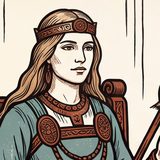
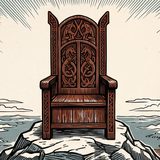
- Óðinn and Frigg sat in Hliðskjálf, looking over all the worlds. Óðinn asked her to see her foster-son Agnarr, begetting children with a giantess in a cave, while his own foster-son Geirröðr was a king. The prose does not say more, but their words imply that the old couple had been the two gods. Frigg answered that Geirröðr was so mean with food that he tortured his guests if too many came. Óðinn called that the greatest of lies, and they made a wager. Grímnismál 1
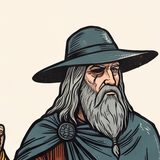
- Frigg sent her maid Fulla to Geirröðr to warn him against a sorcerer who had come to his land; the sign, she said, was that no dog would attack him. The prose calls the charge of meanness a great slander, but the king had the man seized whom the dogs would not touch. He wore a dark-blue cloak, called himself Grímnir, and said nothing more about himself. Grímnismál 1
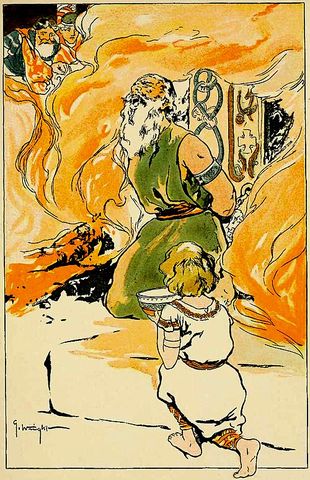
- The king had him tortured to make him talk and set him between two fires, and there he sat for eight nights. The king's ten-year-old son, named Agnarr after his uncle, brought him a full horn and said his father did wrong to torment an innocent man. By then the fire was so close that Grímnir's cloak was burning. Grímnismál 1
- Grímnir spoke. For eight nights no one had offered him food except Agnarr, who alone would rule the land of the Goths. For a single drink, said Veratýr, Agnarr would never get a better reward. Grímnismál 2, Grímnismál 3
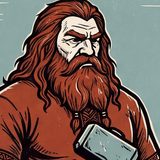
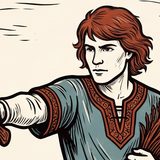
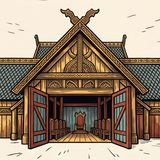
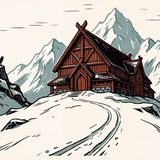
- Then he described the homes of the gods: Þórr in Þrúðheimr, Ullr in Ýdalir, Álfheimr given to Freyr as a tooth-gift, Sökkvabekkr where Óðinn and Sága drink from golden cups, Glaðsheimr with Valhöll, Þrymheimr where Skaði lives in her father's old home, Baldr's Breiðablik, Heimdallr's Himinbjörg, Freyja's Fólkvangr, Forseti's Glitnir, Njörðr's Nóatún and Víðarr's land. Grímnismál 4, Grímnismál 5, Grímnismál 7, Grímnismál 8, Grímnismál 11, Grímnismál 12, Grímnismál 13, Grímnismál 14, Grímnismál 15, Grímnismál 16, Grímnismál 17
- He told of Valhöll, roofed with shields, with spear-shafts for rafters, a wolf hanging by the west door and five hundred and forty doors; and of the ash Yggdrasill, with Hel under one root, the frost-giants under another and humankind under the third, a tree that suffers more than men know. He also said that he had shown his face to the gods, and that help would now awaken. Grímnismál 9, Grímnismál 10, Grímnismál 23, Grímnismál 31, Grímnismál 35, Grímnismál 45
- He reeled off his names: Grímr, Gangleri, Herjann, Bölverkr, Grímnir and dozens more. 'A single name have I never had', he said, since he first went among the peoples. He was Grímnir at Geirröðr's, and Hárbarðr among the gods. Grímnismál 46, Grímnismál 47, Grímnismál 48, Grímnismál 49
- Then he turned on the king: 'Drunk art thou, Geirröth'. Geirröðr had lost his favour, the favour of the einherjar and of Óðinn. He saw his friend's sword lying all wet with blood; Yggr would soon have the king's corpse. Now he could see Óðinn: 'Now come to me if thou canst!' He was Óðinn now, he said, and had been Yggr and Þundr before. Grímnismál 51, Grímnismál 52, Grímnismál 53, Grímnismál 54
- Geirröðr sat with his sword on his knee, half drawn. When he heard that it was Óðinn, he stood up to take him from the fire. The sword slipped from his hand, hilt down; the king tripped, fell forward onto it and died. Óðinn vanished, and Agnarr ruled there long afterwards. Grímnismál 2
Where the sources differ
Snorri does not tell the frame story, but he quotes many Grímnismál stanzas on the halls, Valhöll and Yggdrasill (e.g. g-c21-2, g-c40-2) and gives a similar list of Óðinn's names (g-c20-8). This Geirröðr is a human king, not the giant Geirröðr whom Þórr visits. The prose never says outright that the poor couple were Óðinn and Frigg, and it does not say what the farmer whispered to Geirröðr. It also does not quite say that Óðinn caused the king's death; the poem has him foresee it.
Read it yourself
- Grímnismál 1 — The whole set-up: two brothers, two foster-parents, a wager and a slander.
- Grímnismál 2 — Eight nights between the fires, and one boy who brought a drink.
- Grímnismál 48 — 'A single name have I never had': Óðinn's list of names.
- Grímnismál 2 — The king falls on his own sword.
Who takes part
 Óðinn
 Frigg
 Geirröðr konungr
 Agnarr Geirröðarson
 Hliðskjálf
 Fulla
 Gotar
 Þórr
 Þrúðheimr
 Ullr
 Freyr
 Álfheimr
 Sökkvabekkr
 Sága
 Glaðsheimr
 Valhöll
 Þrymheimr
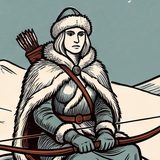 Skaði
 Breiðablik
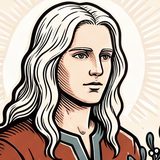 Baldr
 Himinbjörg
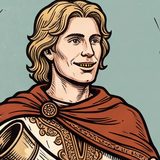 Heimdall
 Fólkvangr
 Freyja
 Glitnir
 Forseti
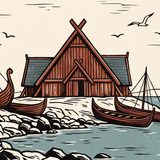 Nóatún
 Njörðr
 Víðarr
 Yggdrasill
 Hel
 einherjar
Why here in the order: No source dates it; placed with Óðinn's other journeys in disguise as a reading aid.