
Svipdagr and Menglöð
A son wakes his dead mother for spells; in a second poem, Svipdagr reaches the guarded hall of his fated bride.
Mímir: AI draft · not reviewed
- Grógaldr (Gróa's spell) opens at a grave. A son calls at the doors of the dead, telling his mother Gróa to wake. She had told him to come to her cairn if he ever needed her. Grógaldr 1
- Gróa asks what trouble makes her only son call on his mother, who has gone into the earth. He says the treacherous woman who married his father has set him a cruel task: to go where no one can go, to seek Menglöð. Grógaldr 2, Grógaldr 3
- Gróa tells him the way is long, but 'long is love as well'; he may get what he wants if fate allows. He asks her for good spells, since he is young and fears he will die on the road. Grógaldr 4, Grógaldr 5
- She sings him nine charms: first the one Rani sang to Rindr, to shake off what he hates and be his own guide; for the bolts of Urðr to guard him; for the rivers Horn and Ruðr to dry before him; for enemies to turn to peace; for fetters to fall from his limbs; for calm sea; against frost on the mountains; against the curse of a dead Christian woman on a dark road at night; and for words and wit if he must talk with a giant. Grógaldr 6, Grógaldr 7, Grógaldr 8, Grógaldr 9, Grógaldr 10, Grógaldr 11, Grógaldr 12, Grógaldr 13, Grógaldr 14
- She sang them standing on an earth-fast stone inside her door. He should carry his mother's words in his breast: he will have good luck as long as he remembers them. Grógaldr 15, Grógaldr 16
- Fjölsvinnsmál (the sayings of Fjölsviðr) begins at a hall surrounded by flickering flame. A stranger arrives. The gatekeeper, Fjölsviðr, calls him a friendless wolf and tells him to go home. The stranger says he wants to see what his eyes long for: the shining golden halls. Fjölsvinnsmál 1, Fjölsvinnsmál 2, Fjölsvinnsmál 31
- Asked his name, the stranger says he is Vindkaldr, son of Várkaldr. He asks who rules the hall: Menglöð. Then he asks question after question, and Fjölsviðr names everything: the gate Þrymgjöll, which holds fast anyone who opens it; the wall Gastrópnir, built from the limbs of Leirbrimir; the hounds Gífr and Geri; the tree Mímameiðr, whose roots no one knows and which neither fire nor iron will fell; and the golden cock Víðópnir in its branches. Fjölsvinnsmál 6, Fjölsvinnsmál 7, Fjölsvinnsmál 8, Fjölsvinnsmál 10, Fjölsvinnsmál 12, Fjölsvinnsmál 14, Fjölsvinnsmál 20, Fjölsvinnsmál 23, Fjölsvinnsmál 24
- Can anyone get in? The hounds sleep in turns, one by night and one by day. The only food that would distract them is Víðópnir's two wing-joints. The weapon that could send Víðópnir to Hel is Lævateinn, which Loptr made with runes below the gates of the dead; it lies with Sinmara in a chest under nine locks. She would give it only for the bright sickle that lies among Víðópnir's own feathers. Fjölsvinnsmál 16, Fjölsvinnsmál 18, Fjölsvinnsmál 26, Fjölsvinnsmál 28, Fjölsvinnsmál 30, Fjölsvinnsmál 25
- The hall is called Hyrr, and trembles as if on a spear's point. Its builders included Loki. Menglöð sits on Lyfjaberg, a mountain that heals any woman who climbs it, with nine maidens at her knees, among them Eir and Aurboða, who help those who sacrifice to them. Fjölsvinnsmál 32, Fjölsvinnsmál 34, Fjölsvinnsmál 36, Fjölsvinnsmál 38, Fjölsvinnsmál 40, Fjölsvinnsmál 33, Fjölsvinnsmál 35, Fjölsvinnsmál 37
- Is there any man who may sleep in Menglöð's arms? None, says Fjölsviðr, but Svipdagr: the sun-bright bride was promised to him. The stranger tells him to throw open the gates: here is Svipdagr. The hounds fawn and the house opens. Menglöð threatens him with ravens if he lies; he names himself Svipdagr, son of Sólbjartr. She welcomes him with a kiss: she has sat long on the mountain waiting for him, and now they will spend their lives together. Fjölsvinnsmál 41, Fjölsvinnsmál 42, Fjölsvinnsmál 43, Fjölsvinnsmál 44, Fjölsvinnsmál 45, Fjölsvinnsmál 47, Fjölsvinnsmál 48, Fjölsvinnsmál 49, Fjölsvinnsmál 50
Where the sources differ
From general knowledge, not from these texts: Grógaldr and Fjölsvinnsmál are not in the Codex Regius, the main manuscript of the Poetic Edda, but survive only in much later copies, and editors often read them as two halves of one story, sometimes called Svipdagsmál. Neither poem mentions the other. In the Old Norse of Grógaldr the son is never named ('Sonr kvað', grg-s1); the name Svipdag in the English column is the translator's. The link is Menglöð: he is sent to seek her (grg-s3), and in Fjölsvinnsmál she is promised to Svipdagr (fjm-s42). He first gives a false name, Vindkaldr (fjm-s6). Nothing says this Gróa is the seeress Gróa who sang over Þórr's head (s-c25-1). The Christian dead woman of grg-s13 (kristin dauð kona) suggests the poem was made in Christian times. The English column of Fjölsvinnsmál is often several stanzas off, and fjm-s2 holds several stanzas in one row; the steps cite the Old Norse.
Read it yourself
- Grógaldr 1 — A son wakes his dead mother at her grave.
- Fjölsvinnsmál 26 — The sword Lævateinn, locked away below the gates of the dead.
- Fjölsvinnsmál 42 — Only one man may sleep in Menglöð's arms.
Who takes part
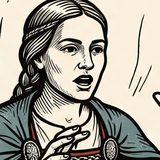 Gróa
 Svipdagr
 Menglöð
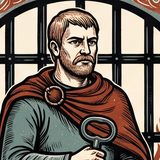 FjölsviðrVíðófnir
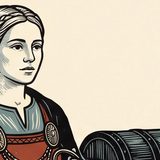 Sinmara
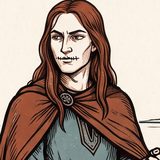 Loki
 Eir
 Aurboða
 Rindr
Why here in the order: No source dates it. It is placed after Freyr and Gerðr, another Eddic wooing of a woman in a hall behind flickering fire (skm-s8, fjm-s31), only as a reading aid.