
The first war: Æsir and Vanir
Völuspá ties the gods' first war to a woman who would not stay dead; Snorri's peace ends with a man made of spit.
Mímir: AI draft · not reviewed
- The seeress of Völuspá remembers the first war in the world. She ties it to the time when the gods stabbed Gullveig with spears and burned her in the hall of Hárr (Óðinn). They burned her three times, and three times she was born again; she still lives. Völuspá 21
- The next stanza speaks of a woman called Heiðr, a seeress who went from house to house working seiðr, a kind of magic, and was the delight of wicked women. The poem does not say outright that she is Gullveig, but it sets the two side by side. Völuspá 22
- The gods met in council over whether the Æsir should pay tribute, or whether all the gods should share in the offerings. Völuspá 23
- Then Óðinn threw his spear over the enemy host: this, the poem repeats, was the first war in the world. The wall of the Æsir's stronghold was broken, and the Vanir, with their war-magic, trod the plain. The poem says no more about how the war ended. Völuspá 24
- Snorri tells only the ending. The gods had a quarrel with the people called the Vanir; they arranged a peace meeting and made a truce. As its sign, both sides went to one vat and spat into it. Skáldskaparmál 5
- The two sides exchanged hostages. The Vanir gave Njörðr, who had been raised in Vanaheimr, and took in return Hœnir. Njörðr became the bond of peace between the gods and the Vanir. In Vafþrúðnismál, the giant adds that Njörðr will go home to the wise Vanir at the end of the age. Gylfaginning 23, Vafþrúðnismál 39
- In Lokasenna Njörðr himself remembers being sent far away as a hostage to the gods. His comfort, he says, is the son he fathered, whom no one hates; Týr then praises Freyr as the best of the gods. Lokasenna 35, Lokasenna 37
- The gods would not let the peace-token go to waste. From the spittle in the vat they made a man, Kvasir, so wise that no one could ask him a question he could not answer. His death begins the story of the mead of poetry. Skáldskaparmál 5
Where the sources differ
Völuspá tells the war but not the peace; Snorri tells the peace and the hostages but not the war, which he never describes. Neither says who won; Völuspá only says the Æsir's wall was broken. Völuspá does not explain who Gullveig was or why the gods attacked her. A longer account with more hostages is found outside the Eddas, in Snorri's Ynglinga saga.
Read it yourself
- Völuspá 21 — Gullveig burned three times and born three times.
- Völuspá 24 — Óðinn's spear-throw and the broken wall: the whole war in eight lines.
- Skáldskaparmál 5 — The truce sealed by spitting into one vat, and Kvasir made from it.
Who takes part


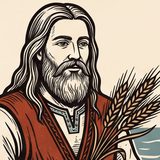
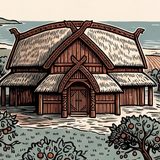
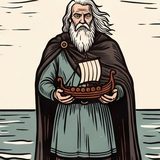
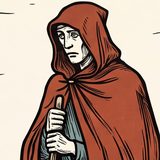

Why here in the order: Völuspá calls it the first war in the world and tells it before Baldr's death.