
Máni
MOW-ni [ˈmauːnɪ] ? pronunciation: draft
Máni
god
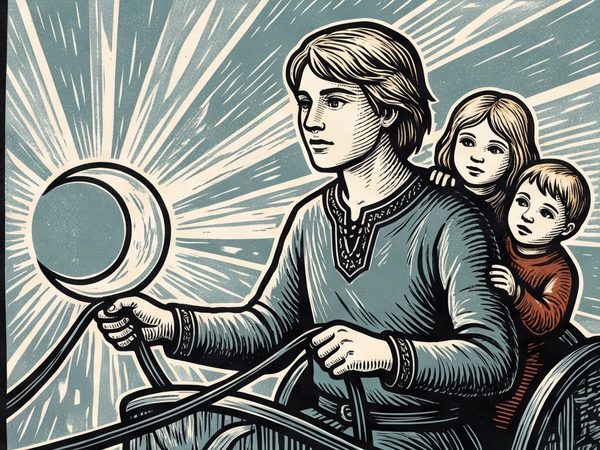
The Moon as a person: he steers the moon's course, and took two children from the earth to follow him.
Mímir: AI draft · not reviewed
Key facts
- Family
- Son of Mundilfari, brother of Sól (Sun) Gylfaginning 11, Vafþrúðnismál 23
 Mundilfari
 Sól
- Known for
- He steers the course of the moon and rules its waxing and waning. He took up two children, Bil and Hjúki, as they walked from a well carrying a cask on a pole; they follow him, as can be seen from the earth. Gylfaginning 11
 Bil
 Hjúki
- Fate
- The wolf Hati runs ahead of the sun, eager to seize the moon; Snorri also says a wolf, Mánagarmr, will swallow the moon and splash the sky with blood Gylfaginning 12, Gylfaginning 51
 Hati Hróðvitnisson
 Mánagarmr
- Other names
- In Alvíssmál the moon is called "Máni" by men and has other names among gods, giants, dwarves and elves Alvíssmál 14
Read it yourself
- Gylfaginning 11 — Mundilfari's children set in the sky; Bil and Hjúki.
- Völuspá 5 — In the beginning the moon did not know its own power.
- Gylfaginning 12 — The wolf-brood of Ironwood and the Moon-Hound.
In the stories
The story in brief
Máni ("Moon") is the moon personified, son of Mundilfari and brother of Sól, the sun. Gylfaginning (chapter 11) tells how Mundilfari named his two beautiful children after the moon and sun, and the gods, angered at his pride, set them in the sky: Máni steers the moon's course and governs its waxing and waning. Snorri adds that Máni took two children, Bil and Hjúki, up from the earth to follow him.
Skáldskaparmál chapter 34 lists "sister of Máni" among kennings for the sun and quotes a verse speaking of "grey-sarked Máni", and Reginsmál 23 calls the sun "the moon's bright sister". Some mentions gathered under this name are unrelated: in Háttatal and Skáldskaparmál chapter 76 the form Manar refers to the Isle of Man, and in Skáldskaparmál chapter 64 a verse is quoted from a skald named Máni; the index may mix them.
Summary: AI draft · not reviewed
Not in the Eddas
- Ragnarök is the end of everything: Norse myth closes in total destruction. What the sources say →