
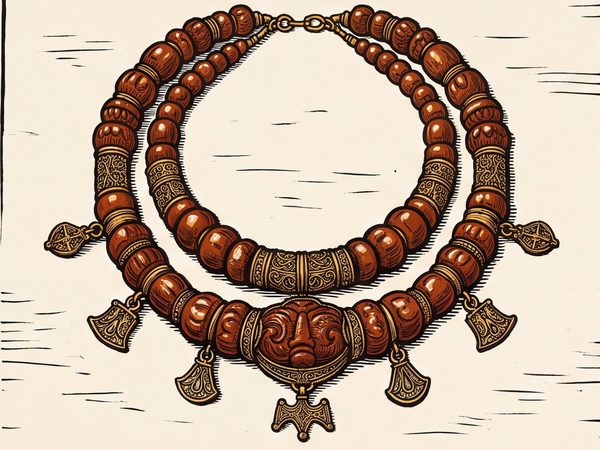
Brísingamen
BREE-seeng-ga-mehn [ˈpriːsiŋkaˌmɛːn] ? pronunciation: draft
Brísingamen
object
Freyja's necklace: it bursts when she snorts with rage, then is put on Þórr when he is disguised as a bride.
Mímir: AI draft · not reviewed
Key facts
- Owner
- Freyja ("Freyja átti Brísingamen"). Gylfaginning 35
 Freyja
- Known for
- When Loki and Þórr ask Freyja to marry the giant Þrymr, she snorts so angrily that the gods' hall shakes and the necklace bursts Þrymskviða 12, Þrymskviða 13Freyja
 Þrymr
- Known for
- Heimdallr proposes dressing Þórr as the bride with "the mighty Brisings' necklace", and so it is done Þrymskviða 15, Þrymskviða 19
 Heimdall
 Þórr
- Lost
- Snorri knows another tale: Heimdallr fought Loki over the necklace at Vágasker and Singasteinn, told in Úlfr Uggason's Húsdrápa, where both were in the shape of seals. Loki is called "Thief ... of Brísinga-men". Skáldskaparmál 15, Skáldskaparmál 23Heimdall
 LokiÚlfr Uggason
Read it yourself
- Þrymskviða 13 — Freyja's fury bursts the necklace.
- Þrymskviða 19 — Þórr dressed as a bride, necklace and all.
- Skáldskaparmál 15 — Traces of a lost myth: Heimdallr and Loki fight for it.
In the stories
The story in brief
Brísingamen ("necklace of the Brísingar") is Freyja's necklace. Gylfaginning (chapter 35) simply states that she owns it.
In Þrymskviða, when Loki asks Freyja to marry the giant Þrymr so that Þórr can get his hammer back, she snorts so angrily that the necklace bursts (stanza 13); Heimdallr then proposes that Þórr be dressed as the bride and wear the necklace (15, 19). Skáldskaparmál refers to another myth: Heimdallr fought Loki at Vágasker and Singasteinn for the necklace, both in the form of seals, as told in Úlfr Uggason's Húsdrápa (chapter 15), and Loki is called "thief of Brísingamen" (chapter 23). A later prose tale, Sörla þáttr, tells how Freyja obtained it from four dwarves and how Loki stole it.
Summary: AI draft · not reviewed
Not in the Eddas
- Freyja got the necklace Brísingamen by sleeping with the four dwarves who made it. What the sources say →