
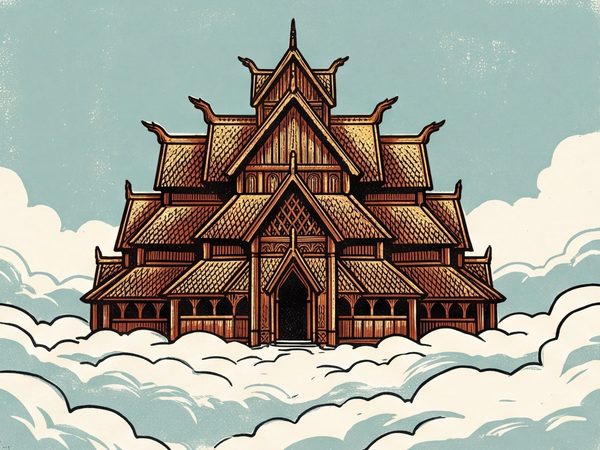
Gimlé
GIM-lyeh [ˈcɪmljɛ] ? pronunciation: draft
Gimlé · Gimli
place (myth)
A hall fairer than the sun, roofed with gold, that still stands when heaven and earth are gone.
Mímir: AI draft · not reviewed
Key facts
- What
- A hall at the southern end of heaven, brighter than the sun and roofed with gold Gylfaginning 17, Völuspá 64
- Who lives here
- Good and righteous people, for all ages Gylfaginning 17, Gylfaginning 3, Völuspá 64
- Fate
- It will stand when both heaven and earth have passed away; after Ragnarök it is the best place to be Gylfaginning 17, Gylfaginning 52
- Where
- Snorri thinks it lies in a third heaven, Víðbláinn, above a second called Andlangr; only light-elves live there now Gylfaginning 17
 VíðbláinnAndlangr
 Ljósálfar
Read it yourself
- Völuspá 64 — The seeress sees a hall roofed with gold.
- Gylfaginning 52 — Good and evil halls after the end.
In the stories
The story in brief
Gimlé is the hall or place of the righteous after the end of the world, fairer than the sun and roofed with gold. Völuspá 64 tells how, after Ragnarök, the seeress sees a gold-roofed hall standing on Gimlé, where worthy lords will dwell in lasting happiness.
Snorri uses it three times in Gylfaginning. In chapter 3 the righteous go after death to Gimlé (or Vingólf), and the wicked to Hel and Niflhel. In chapter 17 Gimlé is the fairest hall, at the southern end of heaven, which will stand when heaven and earth have passed away. In chapter 52, after Ragnarök, it will be best to be in Gimlé. Snorri's placing of Gimlé in heaven goes beyond what Völuspá says.
Summary: AI draft · not reviewed
Not in the Eddas
- Hel is the Norse hell, a place of fire and punishment for the wicked. What the sources say →