
The world renewed
After the fire, the earth comes up green again, and the gods find their old golden game pieces in the grass.
Mímir: AI draft · not reviewed
- Gangleri asks what is left once the world is burned and gods and men are dead. There will be good places and bad ones, Þriði answers. Best is Gimlé in heaven; there is plenty to drink in the hall Brimir on Ókólnir, and there is a hall of red gold called Sindri on Niðafjöll. Good and righteous people will live there. Gylfaginning 52
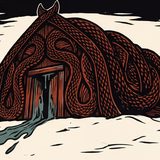
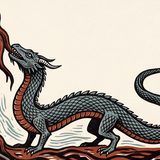
- On Náströnd stands a great, evil hall with its doors facing north, woven of snakes' backs, with poison running through it. Oath-breakers and murderers must wade those rivers. Worst of all is Hvergelmir, where Níðhöggr torments the bodies of the dead. Gylfaginning 52
- The seeress of Völuspá sees the earth rise a second time out of the sea, green again. Waterfalls tumble, and an eagle flies over, hunting fish from the cliff. Snorri adds that fields will grow unsown. Völuspá 59, Gylfaginning 53
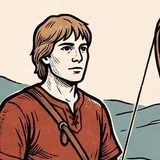
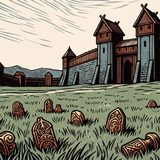
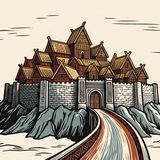
- Víðarr and Váli are alive; neither sea nor Surtr's fire has harmed them. They live on Iðavöllr, where Ásgarðr used to be. Þórr's sons Móði and Magni come there and have Mjöllnir. Gylfaginning 53, Vafþrúðnismál 51
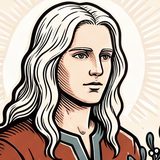
- Baldr and Höðr come back from Hel. The gods sit together and talk over the old days: the Miðgarðr serpent, the wolf Fenrir, and the ancient runes. In the grass they find the golden game pieces the Æsir had owned long ago. Gylfaginning 53, Völuspá 60, Völuspá 61, Völuspá 62
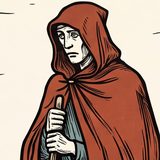
- In Völuspá, Hœnir chooses the lot-twigs, and the sons of two brothers live in wide Vindheimr, the wind-home. Völuspá 63
- Two people survive, Líf and Leifþrasir, hidden in Hoddmímir's wood. They live on the morning dew, and from them comes a race large enough to fill the world. Gylfaginning 53, Vafþrúðnismál 44, Vafþrúðnismál 45
- Before the wolf takes her, the sun bears a daughter as beautiful as herself, and the daughter rides her mother's road across the sky. Gylfaginning 53, Vafþrúðnismál 46, Vafþrúðnismál 47
- Völuspá sees a hall fairer than the sun, roofed with gold, on Gimlé, where the worthy will live in joy forever. A mighty one, who rules all things, comes from above to the judgment. Völuspá 64, Völuspá 65
- Völuspá does not end in peace. The dark dragon Níðhöggr comes flying up from Niðafjöll with corpses in his feathers, and the poem ends: 'now must I sink.' Snorri ends with Hárr saying no one has ever told the course of the world further than this. Völuspá 66, Gylfaginning 53
Where the sources differ
Völuspá names Baldr, Höðr and Hœnir in the new world but not Víðarr, Váli, Móði or Magni; those come from Vafþrúðnismál, which Snorri quotes (vm-s51, g-c53-3). Vafþrúðnismál hides Líf and Leifþrasir through the great winter, the fimbulvetr (vm-s44, vm-s45); Snorri hides them through Surtr's fire (g-c53-4). Völuspá does not say who the 'mighty lord' coming to judgment is (vsp-s65), and it ends with Níðhöggr flying, not with the new world at peace (vsp-s66).
Read it yourself
- Völuspá 59 — The green earth rising from the sea.
- Völuspá 61 — The golden game pieces found again in the grass.
- Gylfaginning 53 — Two humans hidden in a wood, living on dew.
Who takes part
 Gimlé
 Niðafjöll
 Náströnd
 Hvergelmir
 Níðhöggr
 Víðarr
 Váli
 Iðavöllr
 Ásgarðr
 Móði
 Magni
 Mjöllnir
 Baldr
 Höðr
 HænirLeifþrasir
 Hoddmímis holt
 Surtr
 Sól
 Fenrir
Why here in the order: Völuspá and Snorri both tell it after Surtr's fire.