
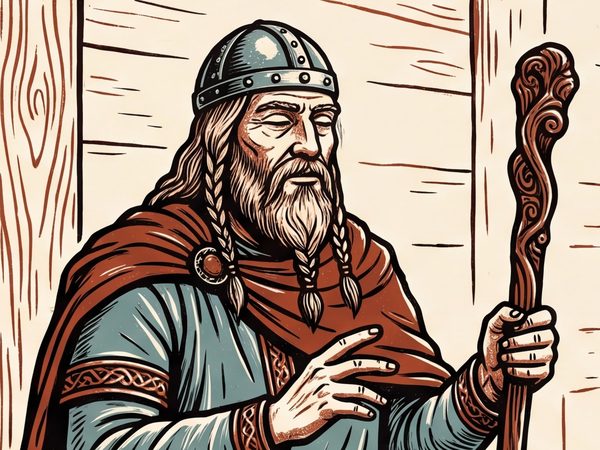
Grípir
GREE-pir [ˈkriːpɪr̥] ? pronunciation: draft
Grípir
king
Sigurðr's uncle, a far-seeing king who told the young hero his whole life in advance.
Mímir: AI draft · not reviewed
Key facts
- Family
- Son of Eylimi and brother of Hjördís, Sigurðr's mother. He ruled lands and was the wisest of men and could see the future. Grípisspá (with Frá dauða Sinfjötla) 1
 Eylimi
 Hjördís
 Sigurðr Fáfnisbani
- Known for
- In Grípisspá Sigurðr rides to his hall, and Grípir foretells his life in order: vengeance for his father, the killing of Fáfnir and Reginn, the king's daughter asleep in her mail-coat, and later the exchange of shapes with Gunnarr. Grípisspá (with Frá dauða Sinfjötla) 9, Grípisspá (with Frá dauða Sinfjötla) 11, Grípisspá (with Frá dauða Sinfjötla) 15, Grípisspá (with Frá dauða Sinfjötla) 39Sigurðr Fáfnisbani
 Fáfnir
 Regin
 Gunnarr Gjúkason
- Known for
- He tells Sigurðr that his life is not stained by baseness, and his name will live as long as the world. Grípisspá (with Frá dauða Sinfjötla) 23Sigurðr Fáfnisbani
Read it yourself
- Grípisspá (with Frá dauða Sinfjötla) 11 — The dragon fight foretold.
- Grípisspá (with Frá dauða Sinfjötla) 23 — Grípir's comfort: a name that will last.
- Grípisspá (with Frá dauða Sinfjötla) 29 — The warning about Brynhildr.
In the stories
The story in brief
Grípir is a wise, far-seeing king, son of Eylimi and brother of Hjördís, and so the maternal uncle of Sigurðr. He is known only from Grípisspá ("Grípir's prophecy").
In the poem the young Sigurðr rides to his hall, is announced by the servant Geitir, and asks his uncle to foretell his life. Grípir predicts in order the vengeance for Sigmundr, the slaying of Fáfnir and Reginn, and the waking of the valkyrie; then, at first reluctantly (Grípisspá 19-21), the darker part: Sigurðr's love for Brynhildr, the forgetfulness brought on by Grímhildr's wiles (33, 35), the exchange of shapes with Gunnarr (37-39) and his death at the hands of his brothers-in-law. He assures Sigurðr that he will bear no shame and that his name will be famous for ever (23). The poem works as a summary of the Sigurðr story told in the poems that follow it in the Codex Regius.
Summary: AI draft · not reviewed