
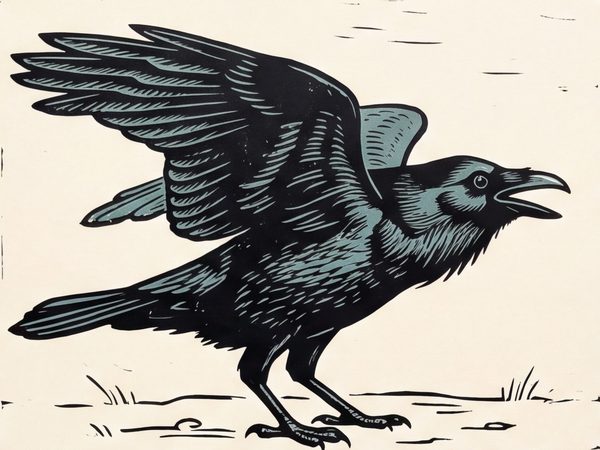
Huginn
HUY-yin [ˈhʏiːjɪn] ? pronunciation: draft
Huginn
animal
One of Óðinn's two ravens, sent out each dawn over the world, though Óðinn fears he may not come back.
Mímir: AI draft · not reviewed
Key facts
- Who
- One of the two ravens who sit on Óðinn's shoulders and tell him all they see and hear; the other is Muninn Gylfaginning 38
 Óðinn
 Munin
- Known for
- Óðinn sends them out at daybreak to fly over the whole world and they return by the morning meal; so he is called Raven-God (Hrafnaguð) Gylfaginning 38Óðinn
- Known for
- Óðinn's words: “I fear for Huginn lest he fare not back”, yet he fears more for Muninn Gylfaginning 38, Grímnismál 20Munin
- Known for
- An old verse fragment: two ravens fly from Óðinn's shoulders, “Huginn to the hanged” and Muninn to the corpses Eddubrot 9Munin
- Known for
- His name is also a poets' word for any raven Skáldskaparmál 75
Read it yourself
- Gylfaginning 38 — Snorri explains the ravens and Óðinn's name Raven-God.
- Grímnismál 20 — Óðinn's worry for his two ravens, in his own verse.
- Eddubrot 9 — The ravens fly off to the gallows and the battlefield.
In the stories
The story in brief
Huginn ("thought") is one of Óðinn's two ravens, with Muninn ("memory"). According to Gylfaginning chapter 38 they sit on Óðinn's shoulders and tell him all they see and hear; he sends them out at daybreak to fly over the world and they return by breakfast time, so Óðinn is called the raven-god.
Snorri quotes Grímnismál 20, where Óðinn says he fears Huginn may not come back, but fears more for Muninn. Huginn is listed among the names of the raven in Skáldskaparmál chapter 75, and in skaldic verse "Huginn's" food or drink means the corpses and blood of battle.
Summary: AI draft · not reviewed