
Rán
ROWN [ˈrauːn] ? pronunciation: draft
Rán
god
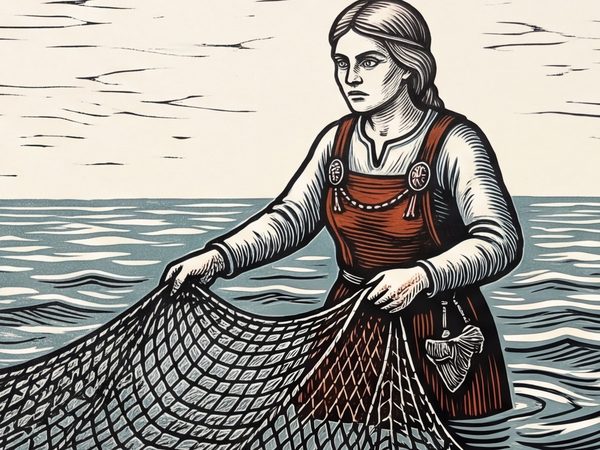
Ægir's wife, who owns a net that catches everyone who goes to sea; she and Ægir have nine daughters.
Mímir: AI draft · not reviewed
Key facts
- Family
- Wife of Ægir. They have nine daughters, among them Himinglæva, Dúfa, Blóðughadda and Kólga; poets use their names in phrases for the sea. Skáldskaparmál 41, Skáldskaparmál 76, Skáldskaparmál 33
 Ægir
 Ægisdætr
- Known for
- Danger at sea: in Helgakviða Hjörvarðssonar a troll-woman would have given a king's men to Rán, and in Helgakviða Hundingsbana I a ship is wrenched from Rán's grip Helgakviða Hjörvarðssonar 18, Helgakviða Hundingsbana I 30
- Carries
- A net with which she catches everyone who goes to sea. Loki borrows it to catch the dwarf Andvari, who lives in a waterfall in the shape of a pike. Skáldskaparmál 41, Reginsmál 1
 Loki
 Andvari
- Who
- Known mostly from poets' phrases: the sea is "husband of Rán" and "Rán's road", and gold is the light of Ægir and Rán Skáldskaparmál 33, Skáldskaparmál 76, Skáldskaparmál 41
Read it yourself
- Reginsmál 1 — Loki borrows Rán's net to catch Andvari.
- Skáldskaparmál 76 — The names of the nine daughters of Ægir and Rán.
- Helgakviða Hjörvarðssonar 18 — A troll-woman nearly gives a king's crew to Rán.
In the stories
The story in brief
Rán is a sea goddess, wife of Ægir, with whom she has nine daughters, the waves (Skáldskaparmál chapters 33 and 76). The drowned are thought to go to her: in Helgakviða Hjörvarðssonar (18) Atli says the giantess would have given Helgi's men to Rán.
In the prose of Reginsmál Loki borrows Rán's net to catch the dwarf Andvari, who lives as a pike. Skáldskaparmál uses her chiefly for kennings: the sea is "husband of Rán", her "road" or "mouth" is the sea, and gold is the fire of Ægir and Rán, from the tale of Ægir's hall lit by gold (chapter 41).
The "Rani" of Grógaldr (6), who taught a charm to Rindr, is a different figure (often taken as a name of Óðinn) and is probably a false match.
Summary: AI draft · not reviewed