
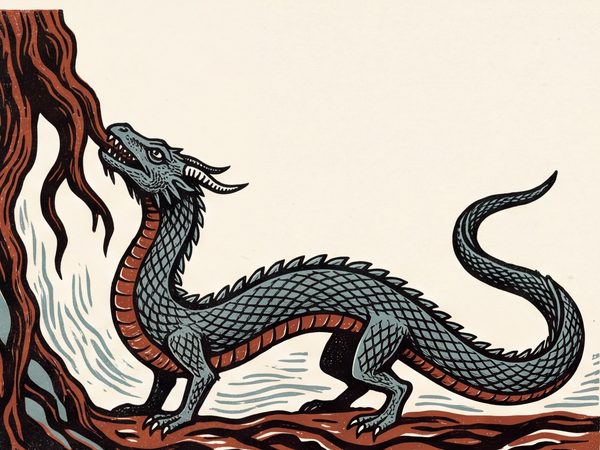
Níðhöggr
NEEDH-hurg-gur [ˈniðhœkːʏr̥] modern Icelandic: Níðhöggur ? pronunciation: draft
Níðhöggr · Níðhöggur
monster · animal
The serpent gnawing the world-ash's root from below, exchanging envious words with the eagle above and tearing at the dead.
Mímir: AI draft · not reviewed
Key facts
- Home
- Under the root of Yggdrasill that stands over Niflheimr, in the spring Hvergelmir, with more snakes than any tongue can count Gylfaginning 15, Gylfaginning 16
 Yggdrasill
 Niflheimr
 Hvergelmir
- Known for
- He gnaws the ash from below, while a hart bites it above and its side rots Gylfaginning 15, Grímnismál 35Yggdrasill
- Known for
- The squirrel Ratatoskr carries the eagle's words down to him; Snorri calls them envious words Grímnismál 32, Gylfaginning 16
 Ratatoskr
- Known for
- In Völuspá he sucks the corpses of the dead at the hall on Náströnd, where oath-breakers and murderers wade; Snorri puts this in Hvergelmir Völuspá 38, Völuspá 39, Gylfaginning 52
 NáströndHvergelmir
- Fate
- Völuspá ends with the dark dragon flying up from Niðafjöll, bearing corpses in his feathers Völuspá 66
 Niðafjöll
- Appears in
- Skáldskaparmál's list of names for serpents Skáldskaparmál 73
Read it yourself
- Grímnismál 35 — The ash suffers more than men know: bitten above, gnawed below.
- Gylfaginning 16 — Eagle, hawk, squirrel, harts and snakes: the tree's creatures.
- Völuspá 39 — The seeress sees him feeding on the dead.
- Völuspá 66 — The last image of Völuspá: the dragon in flight.
In the stories
The story in brief
Níðhöggr ("malice-striker") is the dragon or serpent that gnaws Yggdrasill from below. Grímnismál 35 and Gylfaginning (chapters 15-16) place it at the root over Niflheimr by the spring Hvergelmir, where it lives with many snakes; the squirrel Ratatoskr carries insults between it and the eagle at the top of the tree.
In Völuspá 39 it sucks the corpses of the dead, murderers, oath-breakers and adulterers, at Náströnd, and Snorri echoes this (Gylfaginning 52). The poem's last stanza (66) shows the dark dragon flying up from Niðafjöll bearing corpses on its wings, an image whose meaning after the renewal of the world is much debated. Níðhöggr also appears among the names for serpents in Skáldskaparmál (chapter 73).
Summary: AI draft · not reviewed