
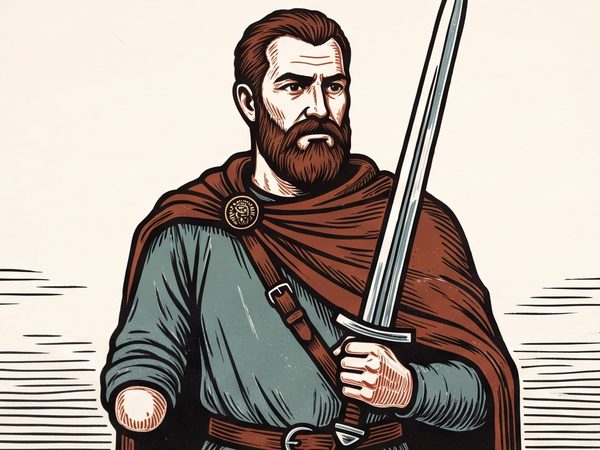
Týr
TEER [ˈtʰiːr̥] ? pronunciation: draft
Tyr
god
The boldest of the gods, who put his right hand in the wolf's mouth as a pledge — and lost it.
Mímir: AI draft · not reviewed
Key facts
- Known for
- Courage and wisdom; he has great power over victory in battle. The bravest man is called "Týr-valiant". Gylfaginning 25
- Lost
- His right hand, bitten off by Fenrir when the gods bound the wolf Gylfaginning 34, Gylfaginning 25
 Fenrir
- Father
- Óðinn, in Snorri; in Hymiskviða Týr calls the giant Hymir his father Skáldskaparmál 16, Hymiskviða 4, Hymiskviða 5
 Óðinn
 Hymir
- Fate
- At Ragnarök he fights the hound Garmr; each kills the other Gylfaginning 51
 Garmr
Read it yourself
- Gylfaginning 34 — The binding of Fenrir: only Týr dares, and only Týr does not laugh.
- Lokasenna 38 — Loki mocks him for his lost hand; Týr's answer follows.
- Hymiskviða 5 — Týr tells Þórr that his giant father Hymir owns a huge kettle.
In the stories
Þórr fishes for the serpentThe binding of FenrirLoki's quarrel at Ægir's feastRagnarökThe sleeping valkyrie
The story in brief
Týr is a god of war and courage among the Æsir, the boldest of them, whom men should call on in battle (Gylfaginning chapter 25). Snorri calls him a son of Óðinn (Skáldskaparmál chapter 16), whereas Hymiskviða makes the giant Hymir his father.
When the gods bind the wolf Fenrir, only Týr dares to feed him, and he places his right hand in the wolf's mouth as a pledge; the wolf bites it off, so he is the one-handed god (Gylfaginning chapter 34). At Ragnarök he and the hound Garmr kill each other (chapter 51). In Hymiskviða he guides Þórr to Hymir to fetch a great kettle (stanzas 4-6, 33). In Lokasenna he defends Freyr, and Loki taunts him with the lost hand and with having fathered a son on his wife (37-40). Sigrdrífumál 6 bids men call twice on Týr when carving victory runes, and in skaldic verse "Týr" serves as a base word for a warrior (Háttatal).
Summary: AI draft · not reviewed