
Bifröst
BIV-rurst [ˈpɪːvˌrœst] ? pronunciation: draft
Bifröst
place (myth)
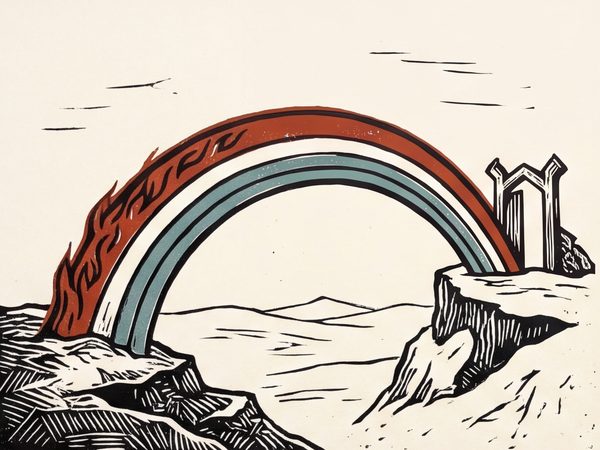
The gods' bridge from earth to heaven — the rainbow, Snorri suggests, with fire burning in its red.
Mímir: AI draft · not reviewed
Key facts
- What
- A bridge the gods made from earth to heaven; "it may be that ye call it rainbow". It has three colours and is very strong Gylfaginning 13
- Other names
- Ásbrú, "the Æsir's Bridge"; Bilröst in the poems Gylfaginning 15, Grímnismál 44, Fáfnismál 15
- Known for
- The red in it is burning fire, which keeps the frost-giants and hill-giants from walking up into heaven Gylfaginning 15
- Who lives here
- Heimdallr, at Himinbjörg by its end, guards it against the hill-giants Gylfaginning 27, Gylfaginning 17
 Heimdall
 Himinbjörg
- Fate
- It will break when the sons of Múspell ride over it at Ragnarök Gylfaginning 13, Gylfaginning 51, Fáfnismál 15
 Múspells synir
Read it yourself
- Gylfaginning 13 — Hárr laughs at the question: you must have seen it.
- Gylfaginning 13 — Why the gods are not to blame for a breakable bridge.
- Grímnismál 29 — The bridge burns with flame; Þórr must wade instead.
In the stories
The story in brief
Bifröst is the bridge the gods built from earth to heaven, which men call the rainbow. Gylfaginning (chapter 13) says it has three colours and is stronger and more skilfully made than other works, yet will break when the sons of Múspell ride over it.
The gods ride over it every day to their court at the well of Urðr (chapter 15); the red in the bow is burning fire, which keeps the giants from crossing. Heimdallr guards it from his dwelling Himinbjörg at heaven's end, where the bridge meets heaven (chapters 17, 27). It is named the best of bridges in the verse quoted in chapter 41, and its breaking under Surtr and the sons of Múspell is retold in the Ragnarök narrative of chapter 51. Grímnismál calls the bridge Bilröst.
Summary: AI draft · not reviewed