


Ásynjur
Ásynjur
people · goddess
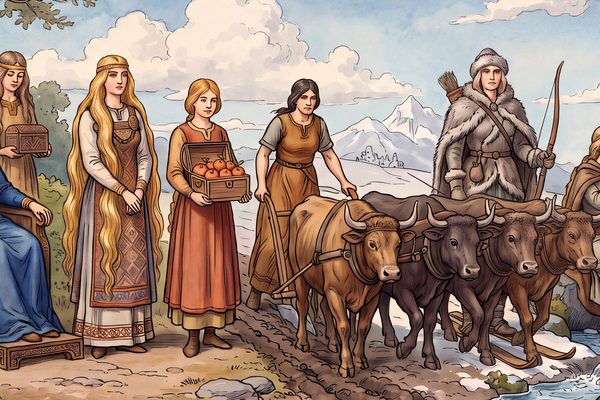
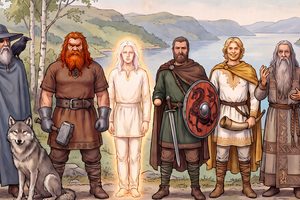
The goddesses: no less holy than the gods, says Snorri, and no less mighty.
Mímir: AI draft · not reviewed
The name
Ásynjur is the plural of ásynja, the feminine of áss 'god': the goddesses of the Æsir.
Sources: Wikipedia: Æsir
Etymology: AI draft from the sources named · not reviewed
Key facts
- Who
- Jafnhárr says the Ásynjur are no less holy than the gods and have no less power. Snorri's list begins with Frigg, the highest, and goes on with Sága, Eir, Gefjun, Fulla, Freyja and many more. Gylfaginning 20, Gylfaginning 35
 Frigg
 Sága
 Eir
 Gefjun
 Fulla
 Freyja
- Also counted
- Jörð, Þórr's mother, and Rindr, Váli's mother, are reckoned among them, and so are Sól and Bil. Gylfaginning 36, Gylfaginning 35
 Jörð
 Rindr
 Sól
- At the feast
- At Ægir's feast eight of them sit with the twelve judges: Frigg, Freyja, Gefjun, Iðunn, Gerðr, Sigyn, Fulla and Nanna. Skáldskaparmál 1FriggFreyjaGefjun
 Iðunn
 Gerðr
 SigynFulla
 Nanna
- In the poems
- The gods and the goddesses meet in council when Þórr's hammer is stolen and when Baldr dreams of his death. Þrymskviða 14, Baldrs draumar 1
 Þórr
 Baldr
Read it yourself
- Gylfaginning 35 — Snorri's list of the goddesses, one by one.
- Gylfaginning 20 — Not less holy than the gods.
- Þrymskviða 14 — The goddesses in council over Þórr's lost hammer.
Around them 1
Companions
Forms and every mention
the goddesses of the Æsir
Forms: ásynjur, ásynjum, ásynja, ásynjurnar · ásynjur, ásynjum, ásynja, ásynjurnar · goddesses, Ásynjur
mentioned 17 times
automatic identification · not reviewed
in 17 rows
Gylfaginning
- 20.3Þá mælti Jafnhárr: "Eigi eru ásynjurnar óhelgari, ok eigi megu þær minna."Then said Jafnhárr: "Not less holy are the Ásynjur, the goddesses, and they are of no less authority."
- 24.1… ok fésælu manna. En Freyja er ágætust af ásynjum. Hon á þann bæ á himni, er Fólkvangr …… of men. But Freyja is the most renowned of the goddesses; she has in heaven the dwelling called Fólkvangr, and wheresoever …
- 35.1Þá mælti Gangleri: "Hverjar eru ásynjurnar?"Then said Gangleri: "Which are the Ásynjur?
- 35.20Sól ok Bil eru talðar með ásynjum, en sagt er fyrr frá eðli þeira.Sól and Bil are reckoned among the Ásynjur, but their nature has been told before.
- 36.3… Þórs, ok Rindr, móðir Vála, eru talðar með ásynjum.… of Thor, and Rindr, Váli's mother, are reckoned among the Ásynjur.
Skáldskaparmál
- 1.2… Víðarr, Váli, Ullr, Hænir, Forseti, Loki. Slíkt sama ásynjur: Frigg, Freyja, Gefjun, Iðunn, Gerðr, Sigyn, Fulla, Nanna. …… Váli, Ullr, Hœnir, Forseti, Loki; and in like manner the Ásynjur: Frigg, Freyja, Gefjun, Idunn, Gerdr, Sigyn, Fulla, Nanna. It seemed …
- 27.1… Gunnlaðar ok Gerðar, sværa Nönnu, dróttning ása ok ásynja, Fullu ok valshams ok Fensala.… and Grídr, Mother-in-law of Nanna, Lady of the Æsir and Ásynjur, Mistress of Fulla and of the Hawk-Plumage and of Fensalir.
- 28.1… grátfagra goð, ástaguð. - Svá má kenna allar ásynjur at nefna annarrar nafni ok kenna við eign …… Vanir, Goddess Beautiful in Tears, Goddess of Love. All the goddesses may be periphrased thus: by calling them by the name …
- 39.2… öll steinsheiti. Kona er ok kennd við allar ásynjur eða valkyrjur eða nornir eða dísir. Konu er …… Woman is also metaphorically called by the names of the Ásynjur or the Valkyrs or Norris or women of supernatural kind. …
- 41.1… Njörðr, Freyr, Týr, Bragi, Viðarr, Loki, svá ok ásynjur Frigg, Freyja, Gefjun, Skaði, Iðunn, Sif. Þórr var …… Odin and Njördr, Freyr, Týr, Bragi, Vídarr, Loki; likewise the Ásynjur: Frigg, Freyja, Gefjun, Skadi, Idunn, Sif. Thor was not there, …
Lokasenna
- 11"Heilir æsir, heilar ásynjur ok öll ginnheilög goð - nema sá einn …"Hail to you, gods! ye goddesses, hail! Hail to the holy throng! Save for the god …
- 31… ógótt of gala; reiðir ro þér æsir ok ásynjur, hryggr muntu heim fara."… thee an evil song; The gods are wroth, and the goddesses all, And in grief shalt thou homeward go."